Photography has never had one universal way of seeing
Ming Smith's work reminds us that the gaze is not simply about what appears within the frame. It shapes what photographers recognise as meaningful before the camera is ever raised.
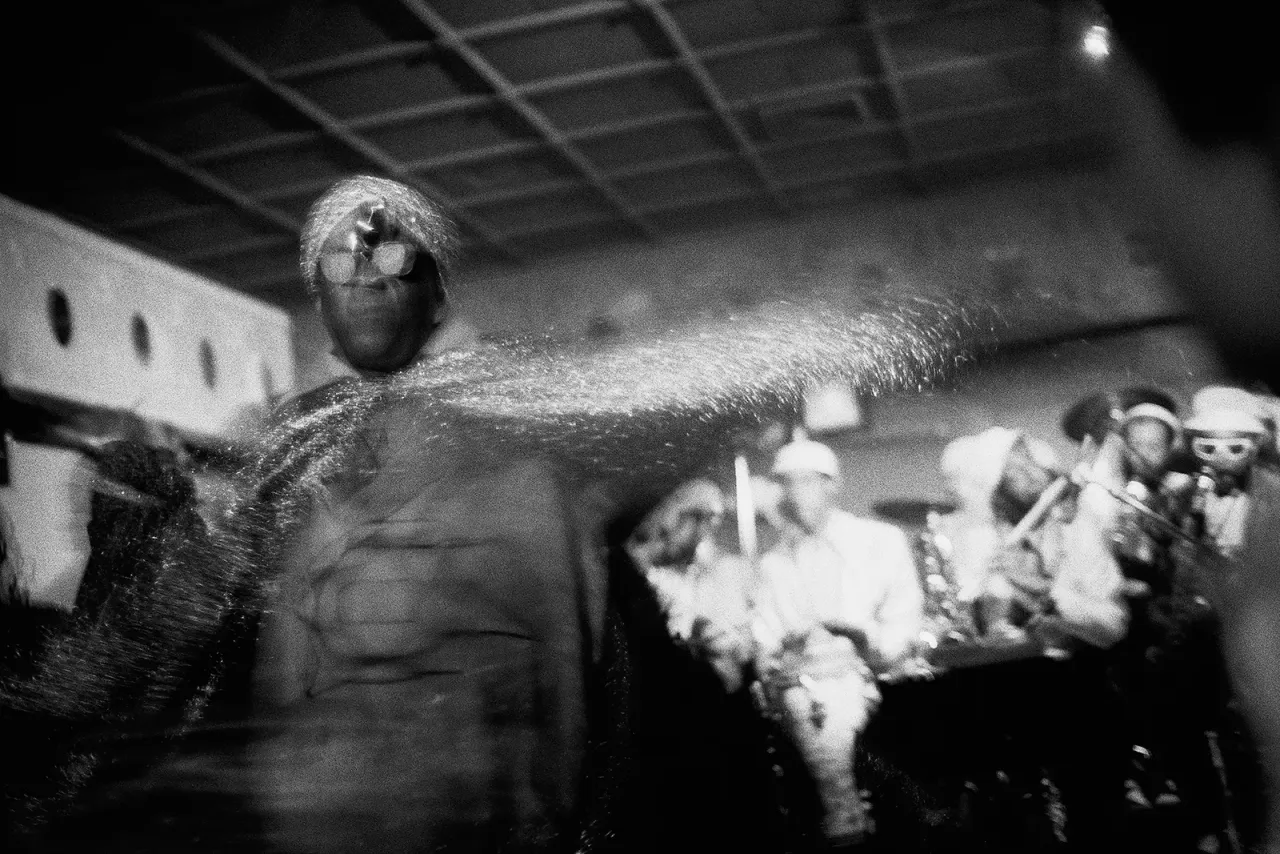
Photography has always claimed a remarkable neutrality.
A camera records light. Exposure can be measured. Focus can be calculated. Aperture, shutter speed and focal length obey the laws of physics rather than the preferences of culture. Because the mechanics of photography appear universal, we often assume that seeing itself is universal as well. We speak about "good composition," "strong storytelling" and "powerful images" as though these qualities exist independently of history, geography or politics.
Yet every photographer learns far more than how to operate a camera.
They also learn what deserves to be photographed. They learn which moments appear significant, which emotions are considered visually compelling, which bodies become symbols, and which stories are treated as universal. They inherit ideas about beauty, truth and documentary authority long before they consciously develop their own photographic voice.
Most of this education happens quietly. It is embedded in museum collections, photography books, university courses, competitions, magazines, workshops and social media feeds. Each generation studies the images celebrated by the previous one, gradually absorbing not only technical skills but also assumptions about what successful photography looks like.
These assumptions become so familiar that they disappear. Photographers rarely think of them as assumptions at all. They become photography itself. This inherited visual philosophy has become photography's de facto gaze. It appears natural not because it is universal, but because it became dominant. In doing so, it has established one particular visual philosophy so successfully that it no longer appears to be a philosophy at all. It simply appears to be photography.
The de facto gaze is not defined by the race of the photographer. Nor is it confined to colonial archives or historical images. It is an inherited way of seeing that emerged through colonialism, Orientalism and European modernity before becoming institutionalised throughout photographic culture. It shapes how photographs are made, edited, exhibited, published and rewarded. It influences photographers of every background, including many Black photographers, because it forms the visual grammar through which photography has largely been taught.
Its greatest power lies not in what it shows but in what it renders invisible. It determines which photographs appear obvious, which subjects seem naturally interesting and which visual narratives require no explanation. It transforms cultural preference into apparent common sense. This is why debates about representation alone are insufficient.
The central question is not whether photography contains stereotypes or whether certain communities have been represented unfairly, although both are undeniably true. The deeper question is how one way of seeing came to define photography itself. The Black gaze offers one possible answer.
It is often misunderstood as photography by Black photographers or photography about Black communities. Neither definition is adequate. While Black lived experience is fundamental to its development, the Black gaze is better understood as a distinct photographic philosophy: a way of producing visual knowledge that begins from Black experience, memory, relationships and cultural understanding rather than inherited conventions of observation.
This distinction matters because it shifts the conversation away from representation alone. The Black gaze is not simply asking for more accurate pictures of Black people. It challenges the assumption that the dominant photographic tradition is culturally neutral in the first place. Its significance therefore extends beyond Black photography.
If photography has always contained multiple ways of seeing, then the history of photography cannot be understood as the gradual refinement of a single universal language. It must instead be understood as the history of competing visual philosophies, some celebrated, others marginalised, many deliberately excluded from the canon.
Seen in this way, the Black gaze is not an alternative to photography. It is evidence that photography has always been capable of more than its institutions have allowed us to imagine.
How one way of seeing came to appear universal
Every culture develops its own ways of seeing. The remarkable achievement of photography's de facto gaze is not simply that it became influential, but that it persuaded generations of photographers it was not a way of seeing at all.
Unlike a photographic style, which announces itself through recognisable aesthetics, the de facto gaze rarely calls attention to itself. It presents its own assumptions as common sense. It does not tell photographers what to believe. It quietly shapes what feels worth noticing. Certain moments appear naturally photographic. Certain compositions feel inherently stronger. Certain stories seem to possess greater emotional weight. By the time a photographer decides to raise the camera, many of the most significant decisions have already been made.
The gaze does not begin when the shutter is pressed. It begins with attention.
This distinction is crucial because we often mistake photographs for photography itself. We critique individual images, asking whether a photograph is ethical, truthful or exploitative, yet the gaze operates at a deeper level. It shapes the conditions under which millions of photographs become imaginable while leaving countless others unseen. Before a photograph can communicate meaning, a photographer must first recognise something as meaningful enough to photograph. Recognition is never neutral.
Every photographer inherits an education, whether through art school, photography clubs, YouTube tutorials, museum exhibitions, photobooks or years spent scrolling through curated social media feeds. Alongside lessons about exposure, composition and editing comes another curriculum that is rarely acknowledged because it is embedded within the photographs themselves.
Before photographers learn to trust their own eyes, they learn to borrow someone else's. They study the images history has already declared indispensable. They revisit the decisive moments, the celebrated documentary projects, the award-winning portraits and the iconic street photographs that define photographic excellence. Gradually, they begin to mistake inherited judgement for personal instinct. Long before they discover a photographic voice, they acquire a photographic accent.
Like spoken language, photography has a grammar. Every photographer inherits conventions about framing, sequencing, emphasis and narrative. They learn where to place the subject within the frame, what constitutes dramatic light, how emotion should be visualised and which moments deserve to become photographs rather than memories. These conventions become so deeply embedded that they cease to appear cultural. They become natural. Yet grammar is never universal. It belongs to particular languages, particular histories and particular communities. Photography is no different.
What many photographers call universal visual language is often the visual grammar of a tradition that emerged through European modernity, colonial expansion and the institutions that grew around them. Because this grammar became dominant, alternative grammars were rarely recognised as complete systems of thought. They were classified as regional, political, ethnographic or alternative, while the dominant tradition quietly occupied the position of photography itself.
Institutions play a decisive role in maintaining this illusion. Museums establish the canon. Publishers determine which photobooks remain in circulation. Universities shape curricula. Festivals and competitions reward particular visual languages. Editors decide which photographs embody documentary truth and which stories deserve international attention. Critics reinforce these judgements by describing recurring aesthetic choices as timeless standards of excellence rather than historically situated preferences.
None of these institutions needs to consciously defend the de facto gaze for it to endure. Together, they form a self-reinforcing ecosystem in which photographers learn to aspire towards images that resemble those already celebrated. Those images, in turn, become the standard against which new work is judged, allowing one inherited visual philosophy to reproduce itself almost unnoticed across generations.
This process affects photographers regardless of race. Black photographers are educated within many of the same institutions, study many of the same photographers and encounter many of the same measures of success. It should not surprise us, therefore, that some reproduce familiar visual conventions even when photographing their own communities. Representation alone cannot explain this phenomenon because representation focuses on who is making photographs rather than the visual philosophy they have inherited.
The question is not simply who holds the camera. The more fundamental question is who taught them what a photograph is. Once that question is asked, the history of photography begins to look different. The canon is no longer simply a collection of great photographs. It becomes a record of which ways of seeing were preserved, celebrated and institutionalised, and which were marginalised, dismissed or rendered invisible.
This is why the de facto gaze is so difficult to recognise. It does not suppress alternative ways of seeing so much as render one way of seeing self-evident. Its greatest success lies not in excluding other photographic philosophies, but in persuading us that no alternatives ever existed.
The Black gaze emerges from this recognition. It is not simply a different way of representing Black people, nor is it a corrective applied to an otherwise neutral medium. It reveals that photography has always contained multiple visual philosophies, each shaped by different histories, relationships and understandings of the world.
For more than a century, one of those philosophies has been mistaken for photography itself. The Black gaze does not create plurality. It reveals the plurality that photography has always possessed.
The Black gaze is not the opposite of the de facto gaze
It is tempting to describe the Black gaze as the opposite of the de facto gaze. Doing so, however, misunderstands both. The de facto gaze is not simply a white gaze, nor is the Black gaze simply a Black one. If that were the case, the discussion would end with identity. Photography has repeatedly shown that identity alone cannot explain how photographs are made. Black photographers can reproduce inherited visual conventions just as photographers from outside Black communities can learn to question them.
The distinction lies elsewhere. The de facto gaze asks photographers to observe. The Black gaze asks photographers to understand.
Observation establishes distance. It positions the photographer as someone who discovers meaning in the world before presenting that meaning to others. This tradition has produced many extraordinary photographs, but it has also encouraged the belief that the camera's primary task is to reveal reality through detached observation.
The Black gaze begins from a different premise. It understands that photographs emerge from relationships rather than encounters. Every image is shaped by histories, memories, trust, language, culture and lived experience that cannot always be seen within the frame itself. A photograph is therefore never simply a record of what stood before the lens. It is the visible trace of relationships that existed before the photograph became possible.
The difference is not simply aesthetic. It changes photography's understanding of significance. Within the de facto gaze, the photographer moves through the world in search of decisive moments, measuring success by the ability to recognise visual significance wherever it appears. Within the Black gaze, significance is rarely waiting to be discovered. It is built through proximity, participation and understanding. The photograph becomes less an act of extraction than an act of recognition. Rather than asking, What have I found? the photographer asks, What have I come to know?
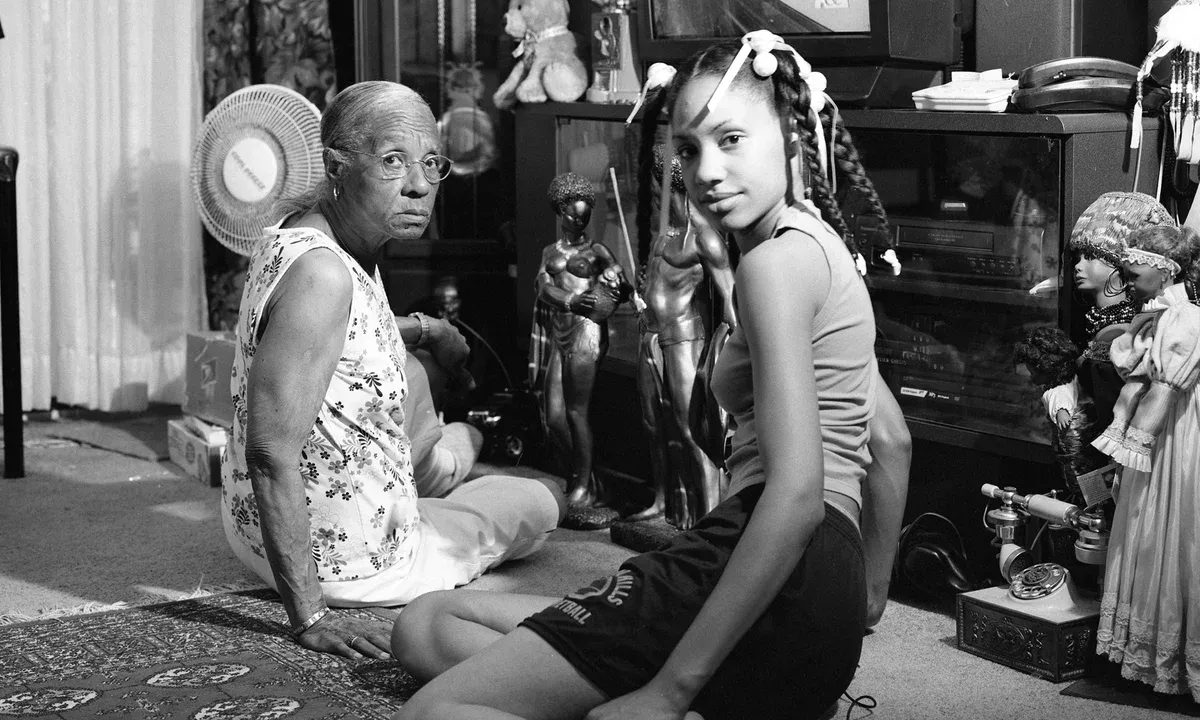
Knowledge is central here. Photography is often described as a medium of evidence. We trust photographs because they appear to show us what happened. Yet photographs also reveal how photographers know the world. Every frame reflects assumptions about what matters, whose experiences require explanation and where meaning resides. The Black gaze therefore produces more than different pictures. It produces different photographic knowledge.
This is why it cannot be reduced to questions of representation. A photograph can include Black subjects while remaining entirely shaped by the de facto gaze. Equally, a photograph informed by the Black gaze is not defined solely by who appears within the frame. It is defined by the philosophy that made the photograph possible.
That philosophy begins with an understanding that Black life cannot be reduced to the visual categories through which it has so often been interpreted. It refuses the expectation that Black photographs must primarily explain oppression, demonstrate resilience or provide evidence of social conditions. Those realities remain important, but they are not exhaustive.
Black life also contains ordinary rituals, private humour, family histories, spiritual practices, tenderness, contradiction, celebration, boredom, imagination and countless other experiences that have often been treated as peripheral to the history of photography. The Black gaze does not introduce these realities into photography for the first time. It recognises that they were always present, even when photographic institutions failed to value them.
In this sense, the Black gaze is expansive rather than corrective. It does not simply replace one set of subjects with another or demand a different moral framework. It enlarges photography's understanding of what is photographically significant. Perhaps this is its most important contribution.
For too long, photography has behaved as though one visual philosophy could adequately explain every community, every culture and every history. The Black gaze rejects that assumption. It reminds us that every act of seeing begins somewhere, and that where we begin inevitably shapes what becomes visible.
The question, then, is no longer whether the Black gaze belongs within photography. The question is whether photography can fully understand itself without it.
What changes when we change the gaze?
If the gaze shapes photography before the shutter is pressed, then changing the gaze changes far more than the final image. It changes the entire photographic process.
Most discussions of photography begin with the photograph itself. They analyse composition, lighting, subject matter or meaning after an image has already been made. Yet every photograph is the outcome of hundreds of decisions that precede the moment of exposure. The gaze influences each of them.
It determines where photographers choose to stand. It influences how long they remain. It shapes who they speak to, whose stories they consider worth hearing and which moments they recognise as significant. By the time a photograph exists, the gaze has already guided attention, framed possibility and established the conditions from which the image could emerge. The photograph is therefore not the beginning of photographic practice. It is its residue.
This helps explain why changing subjects does not necessarily change photography. A photographer can travel to a different country, document a different community or turn the camera towards Black life while continuing to work within exactly the same visual assumptions. New subjects do not automatically produce new ways of seeing.
Nor does diversity alone transform photography. Increasing the number of photographers from historically excluded communities is essential, but representation within existing institutions is not the same as transforming the visual philosophy of those institutions. If success continues to be measured against inherited standards, then diversity risks becoming participation in an unchanged system rather than the creation of new photographic possibilities.
Changing the gaze means changing what photography values. Instead of rewarding distance, it values relationship. Instead of privileging novelty, it recognises familiarity as photographically rich. Instead of seeking spectacle, it finds significance in ordinary life. Instead of asking what appears exceptional, it asks what has been consistently overlooked. These shifts may appear subtle, yet together they fundamentally alter photography's relationship with the world.
Consider how photographic projects are often evaluated. Questions typically focus on originality, access, technical execution or visual impact. Less frequently do we ask how a project came into being.
- What relationships made these photographs possible?
- How did time reshape the photographer's understanding?
- What forms of trust, reciprocity or shared knowledge exist beyond the frame?
- What became visible only because the photographer belonged, listened or returned?
The Black gaze suggests that these questions are not secondary to photographic practice. They are photographic practice.
This perspective also reshapes our understanding of photographic excellence. Excellence is not abandoned, but redefined. Technical mastery remains valuable, yet it is no longer sufficient. A perfectly exposed photograph can still misunderstand its subject. An impeccably composed image can still reproduce inherited assumptions. Technical fluency tells us how well a photographer used the camera. It does not necessarily tell us how deeply they understood what stood before it.
Photography has long celebrated the decisive moment. The Black gaze asks us to pay equal attention to the decisive relationship.
The decisive relationship is built long before the decisive moment arrives. It is formed through presence rather than access, through listening rather than extraction, through returning rather than merely visiting. These qualities cannot always be identified by looking at a single photograph, yet they profoundly shape the knowledge that photograph carries.
Perhaps this explains why certain images continue to resonate long after their immediate subject has faded from memory. They do more than describe an event. They communicate an understanding that could only have emerged through sustained attention and lived proximity. They reveal not simply what the photographer saw, but how the photographer had learned to see.
This is the deeper promise of the Black gaze. It is not a call to replace one canon with another, nor is it an argument that every photograph should conform to a new set of aesthetic rules. It is an invitation to recognise that photography is transformed whenever we transform the conditions under which seeing becomes possible.
The future of photography may therefore depend less on inventing new cameras or new technologies than on cultivating new ways of seeing. Every technical innovation changes what a camera can do. Every philosophical innovation changes what photography can become.
The Black gaze belongs to that second tradition. It expands photography not by adding new subjects, but by enlarging the very horizon of photographic thought.

What photography cannot understand about itself without the Black gaze
Every discipline has ideas that fundamentally alter how it understands itself.
Astronomy ceased to understand the universe in the same way after accepting that the Earth was not its centre. Linguistics changed when it became clear that no single language could explain how all languages function. Anthropology was transformed when it began questioning the authority of the observer rather than treating observation itself as neutral. Photography faces a similar moment.
For much of its history, photography has largely told its own story through technological innovation, aesthetic movements and the biographies of celebrated photographers. Histories of the medium often trace the evolution of cameras, processes, genres and styles, suggesting that photography gradually became more sophisticated as new techniques emerged.
This history is important, but it is incomplete. It tells us how photography developed. It tells us remarkably little about how photography learned to see. The Black gaze exposes this absence.
It reminds us that photography is not simply a technology for recording light. It is also a cultural practice for producing meaning. Every photograph reflects a philosophy of attention, whether that philosophy is acknowledged or not. Every photographic tradition carries assumptions about who is visible, what deserves contemplation, how intimacy is recognised and where significance is expected to reside.
Once this becomes visible, the history of photography begins to shift. Questions that once seemed peripheral move to the centre:
- Why have certain visual traditions become canonical while others remain marginal?
- Why have some forms of intimacy been treated as universally human while others have been classified as cultural particularities?
- Why has everyday Black life so often appeared exceptional only when filtered through dominant visual expectations?
- Why have some photographers been celebrated for revealing worlds that others had been documenting for generations?
These are not questions about diversity. They are questions about knowledge.
The Black gaze suggests that photography has too often mistaken familiarity for universality. Because one visual tradition became globally influential through museums, publishing, education and the market, it came to represent photography itself. Alternative ways of seeing were not usually rejected because they lacked artistic merit. They were often overlooked because the institutions responsible for defining photographic excellence had learned to recognise only one visual grammar as self-evidently authoritative. The consequence reaches far beyond Black photography.
When photography privileges a single way of seeing, it limits its own capacity to understand the world. It repeatedly returns to familiar narratives, familiar compositions and familiar measures of significance while overlooking other possibilities that have existed all along. The result is not simply an incomplete archive of Black life. It is an incomplete understanding of photography. The Black gaze therefore enlarges the discipline rather than fragmenting it.
Some critics worry that speaking of multiple gazes divides photography into competing identities. The opposite is true. Recognising multiple photographic philosophies allows the medium to become more intellectually honest about its own history. It acknowledges that no tradition, however influential, can exhaust the possibilities of photographic thought.
This is not an argument against the photographic canon. It is an argument against confusing the canon with the medium itself.
Photography has always been larger than the institutions that collected it, the competitions that rewarded it or the histories that narrated it. Across families, neighbourhoods, churches, community archives, independent publications and personal albums, countless photographers have been developing ways of seeing that rarely entered mainstream photographic history. Their work did not sit outside photography. It expanded photography, even when the canon failed to recognise it. The Black gaze belongs within this broader expansion.
It demonstrates that photography has never possessed a single centre from which every meaningful image radiates. Instead, the medium has always been sustained by multiple centres of thought, memory and imagination. Some became visible because institutions amplified them. Others remained less visible because institutions lacked the language to recognise their significance.
The task before photography is therefore, not simply to diversify its collections or broaden its reading lists, important though those changes remain. Its deeper task is to rethink the assumptions that have governed what counts as photographic knowledge in the first place.
Only then can photography begin to understand the full extent of its own possibilities. Photography has never had one universal way of seeing. The Black gaze matters because it reminds the medium of that forgotten truth.
Key idea
About Foundation Essays
This essay is part of theBLKGZE's Foundation series, which explores the ideas that shape photography, visual culture and the Black gaze.


