The Black Gaze and the myth of photography's universal vision
Photography has often spoken as though it possessed one universal way of seeing. The Black gaze begins with a different proposition: every way of seeing begins somewhere.
The Black Gaze as a theoretical problem
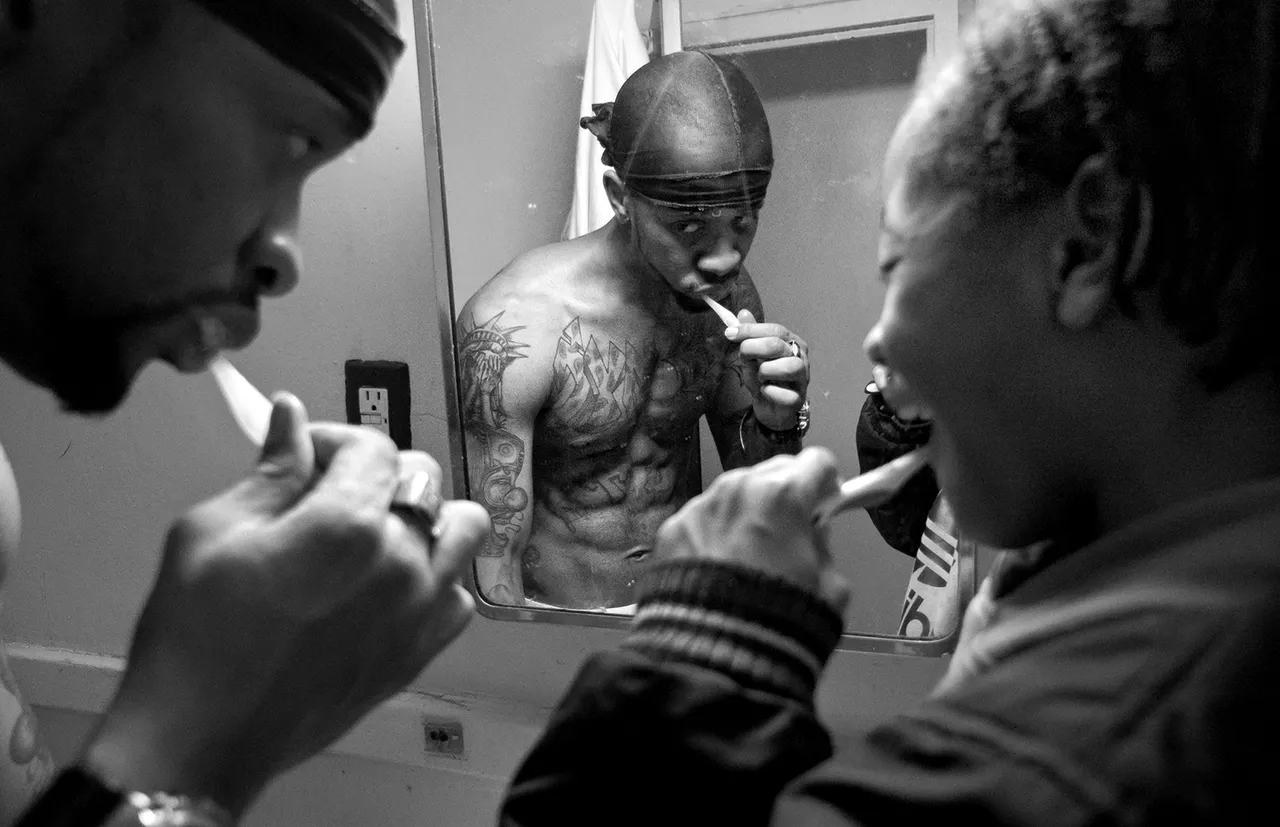
The Black gaze occupies an unusual position within contemporary discussions of photography. Few concepts are invoked more frequently in debates about race, representation and visual culture, yet few have resisted stable definition so consistently. Across Black studies, film theory, photography, cultural criticism and contemporary art, the term has been used to describe acts of resistance, modes of spectatorship, artistic practices, visual epistemologies and forms of cultural memory. This conceptual diversity is not evidence of theoretical weakness. Rather, it suggests that the Black gaze names a field of inquiry whose significance exceeds any single definition.
The search for a definitive account of the Black gaze therefore begins from the wrong premise. It assumes that the concept has remained stable while scholars have merely described it differently. The historical record suggests otherwise. Each major contribution has emerged from a distinct intellectual problem. For some, the central concern has been spectatorship; for others, representation, visuality, archives, aesthetics or photographic practice. The Black gaze has developed not as a unified doctrine but as an evolving conversation, shaped by the questions different scholars have asked of images and the conditions under which those images acquire meaning.
This observation has important consequences for photography. If the Black gaze cannot be reduced to a single theory, neither can it be understood simply as an alternative perspective within an otherwise universal medium. Its instability exposes a deeper instability within photography itself. The assumption that photography possesses one coherent visual language becomes increasingly difficult to sustain once multiple historically situated ways of seeing are acknowledged. The Black gaze therefore does more than introduce another perspective into photographic discourse. It calls into question the idea that photography has ever possessed a universal perspective from which all others deviate.
This position extends the argument advanced in the preceding Foundation essay. There it was argued that photography's claim to universality conceals the historical dominance of one particular visual tradition. The Black gaze represents one of the clearest demonstrations of that proposition. Its existence makes visible what the history of photography has often obscured: that vision is never detached from the histories, communities and cultural formations through which it is learned. Every gaze begins somewhere. Every gaze inherits a way of seeing before it produces a photograph.
The significance of the Black gaze therefore lies not merely in its contribution to Black visual culture, important though that contribution undoubtedly is. Its greater importance lies in what it reveals about photography itself. The concept compels a reconsideration of some of the medium's most fundamental assumptions: that vision precedes interpretation, that photographs communicate universally and that looking can be separated from history. Once these assumptions are subjected to sustained criticism, the question changes. The problem is no longer how the Black gaze differs from photography. The problem becomes how photography came to mistake one historically situated gaze for photography itself.
Rather than proposing another definition of the Black gaze, this essay examines the intellectual tradition from which the concept emerged and considers what it reveals about photography itself. The claim advanced is not that the Black gaze replaces one universal vision with another. It is that the Black gaze seeks to reveal the fullness of Black people, culture and life through Black ways of seeing and knowing, and in doing so expands photography's understanding of its own possibilities.
The rejection of neutral vision
The Black gaze does not begin by proposing a new aesthetic. It begins by refusing one of the oldest assumptions in Western visual culture: that looking can ever be neutral.
This proposition did not emerge from photography alone. It developed across Black feminist thought, film theory and cultural criticism through sustained interrogation of the relationship between vision and power. Among its most influential formulations is bell hooks' essay The Oppositional Gaze: Black Female Spectators, first published in 1992. Although concerned primarily with cinema rather than photography, hooks' intervention altered the intellectual terrain upon which later discussions of the Black gaze would develop.
The significance of the oppositional gaze lies not in its rejection of particular images but in its rejection of the conditions under which those images acquire authority. hooks demonstrates that spectatorship is historically situated. Black women do not encounter visual culture from an abstract or universal position. They look from within histories of enslavement, segregation, exclusion and resistance that fundamentally shape the act of looking itself. Vision, in this account, cannot be separated from history.
This represents a decisive break with theories that treat the viewer as an anonymous observer. The gaze is no longer understood as a physiological function common to all people. It becomes a cultural practice, formed through lived experience and structured by relations of power. To look is therefore to interpret, and interpretation is inseparable from memory, identity and history.
For photography, the implications are profound.
If spectatorship is historically situated, photographic meaning cannot reside exclusively within the image. A photograph does not contain a fixed meaning awaiting discovery by a neutral viewer. Meaning emerges through the encounter between image, maker and audience, each bringing particular histories and forms of knowledge to the act of seeing. The photograph is therefore not simply an object of vision but a site at which different histories of looking converge.
It would, however, be a mistake to reduce hooks' intervention to resistance alone. The oppositional gaze is often summarised as the act of looking back at dominant visual culture. While accurate, this description remains incomplete. Its deeper contribution is epistemological. hooks demonstrates that seeing is neither innocent nor universal. Every act of looking begins somewhere. Every gaze carries the traces of the history that produced it.
Once this proposition is accepted, neutrality ceases to function as photography's organising myth. The question is no longer whether photographs are objective. The question becomes which histories, relationships and forms of knowledge make particular ways of seeing possible.
The Black gaze enters photographic theory at precisely this point. It does not begin as an alternative style of image-making. It begins as the recognition that no gaze, however dominant, has ever been without a history.
Attention as a form of knowledge
If bell hooks demonstrated that vision is historically situated, Tina M. Campt extended the conversation by asking a different question. The problem was no longer simply how Black people look at images produced within dominant visual culture, but how Black visual practices themselves produce forms of knowledge unavailable to conventional theories of photography. The shift is subtle but decisive. The Black gaze moves beyond critique towards epistemology.
Across Listening to Images and A Black Gaze: Artists Changing How We See, Campt argues that Black visual culture demands forms of attention that exceed immediate visual recognition. Her proposition that photographs should be "listened to" rather than merely viewed is not a metaphor designed to animate criticism. It is an epistemological claim. Photographs contain social relations, aspirations, refusals and historical experiences that cannot be exhausted by description alone. The visible image is therefore only one dimension of photographic meaning.
This intervention represents a significant departure from dominant traditions of photographic criticism. Conventional analysis has frequently privileged description, composition and iconography, treating the photograph primarily as a visual object whose meaning can be extracted through increasingly refined acts of observation. Campt reverses this hierarchy. Observation alone is insufficient because photographs do not merely depict the world. They register relationships, cultural memory and ways of inhabiting history that exceed what is immediately available to the eye.
The consequence is a reconfiguration of photographic attention itself. The Black gaze does not simply redirect the camera towards previously neglected subjects. It alters the conditions under which significance is recognised. Everyday gestures, domestic interiors, vernacular archives, family albums and ordinary acts of self-fashioning acquire theoretical importance because they preserve forms of Black life that have often escaped the classificatory ambitions of dominant photographic traditions. Their significance lies not in their exceptionality but in their refusal of spectacle.
This reorientation has profound implications for photography as a discipline. If attention determines what becomes photographically meaningful, then every photographic tradition is also a tradition of exclusion. Ways of seeing are simultaneously ways of overlooking. The history of photography can therefore be read not only through the images it has produced but through the forms of life it has persistently failed to recognise as worthy of sustained attention.
Campt's work suggests that the Black gaze should not be understood primarily as a counter-image to dominant representation. Its more significant contribution lies in its reconstruction of photographic attention. Looking becomes an ethical and epistemological practice through which photographs generate knowledge unavailable to visual systems organised around distance, classification or spectacle. The question ceases to be what the photograph shows. It becomes what forms of life the photograph has learned to notice.
The implications extend beyond Black photography. If photographic attention is historically produced, then the future of the medium depends not simply upon new technologies or new aesthetic movements but upon the cultivation of new ways of seeing. The Black gaze enlarges photography precisely because it enlarges what photography is capable of recognising before the shutter is ever released.
Photography produces ways of knowing
The intellectual significance of the Black gaze extends beyond the work of any individual scholar because it belongs to a broader reconsideration of photography itself. Across cultural theory, Black studies and photographic criticism, an increasingly coherent proposition has emerged: photographs do not simply record the world. They participate in its production by shaping what becomes visible, intelligible and historically significant.
This proposition appears in different forms across the literature. Stuart Hall's theory of representation demonstrates that images actively produce social meaning rather than passively reflecting it. Kobena Mercer's writings on Black diaspora aesthetics reveal that Black artistic practice has not merely sought inclusion within existing histories of art but has transformed the conceptual frameworks through which those histories are understood. Allan Sekula exposes photography's historical participation in systems of labour, surveillance and classification, while Ariella Azoulay reconceives the photograph as a political relationship rather than an isolated object. Teju Cole, writing from the perspective of photographic practice and criticism, reminds us that ethics begins not at the moment of publication but at the moment attention is directed towards one life rather than another.
Although these scholars pursue different questions, they converge upon a common insight. Photography is not simply a technology of vision. It is a cultural system through which societies organise recognition, memory and value. Every photographic tradition therefore establishes its own hierarchy of significance. It determines not only how subjects are represented but which subjects become visible in the first place, which experiences are preserved, which histories are remembered and which forms of life remain outside the frame of collective attention.
The implications are considerable. If photography produces ways of knowing, every photographic tradition also produces forms of ignorance. Seeing and overlooking are not opposite activities but mutually constitutive ones. Every act of attention simultaneously defines the limits of what remains photographically unrecognised. The history of photography is therefore inseparable from the history of its omissions.
The Black gaze acquires theoretical significance precisely because it interrupts these inherited hierarchies of recognition. It does not merely substitute one set of images for another or demand the inclusion of previously excluded subjects. It exposes the contingency of the photographic order itself. What has been treated as natural, universal or self-evident is revealed instead as the historical outcome of particular cultural assumptions about whose lives deserve sustained visual attention.
The question that now emerges is no longer whether photography can accommodate the Black gaze. It is whether photography can adequately understand itself without it. If the Black gaze discloses forms of knowledge that dominant traditions have repeatedly overlooked, then its importance lies not at the margins of photographic theory but at its centre. The issue is no longer representation alone. It is the epistemological horizon of the medium itself.
The Fullness of Black Life
If the preceding discussion has established that photography produces ways of knowing, it follows that every photographic tradition also establishes the limits of what it is capable of knowing. No visual order is infinite. Every gaze confers significance selectively, organising attention around particular values while rendering other forms of life comparatively invisible. The question is therefore not whether photography reduces reality, but according to which principles that reduction takes place.
The Black gaze should be understood in relation to this problem.
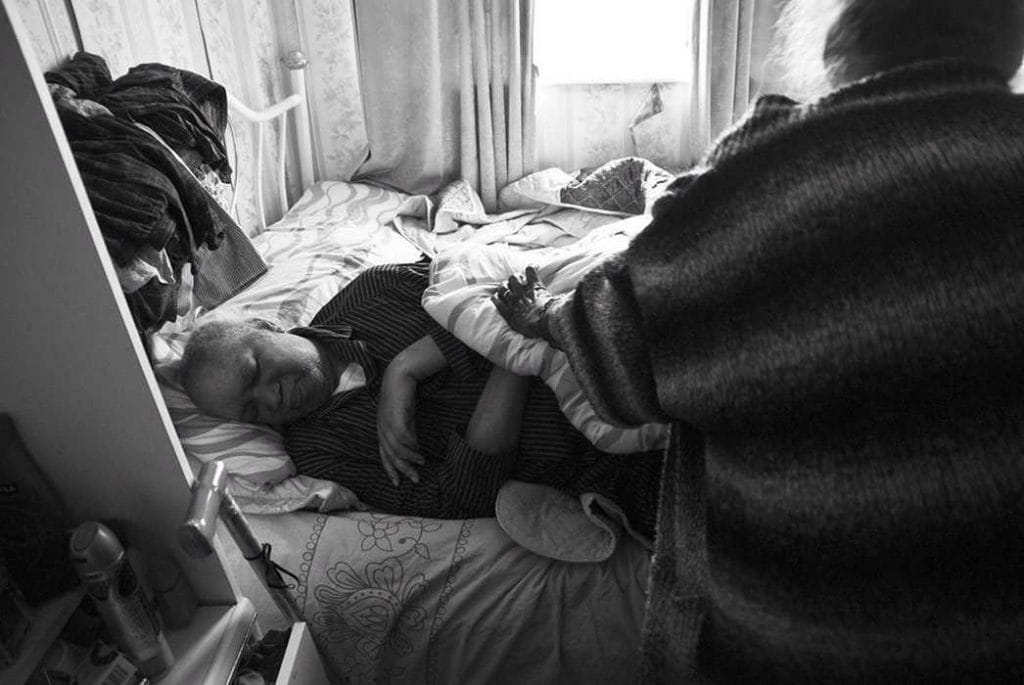
Its significance does not lie primarily in offering alternative representations of Black people, nor in correcting the historical distortions of dominant photographic traditions, necessary though both tasks remain. Its more fundamental contribution lies in the proposition that Black life exceeds every visual system that attempts to contain it. The Black gaze is therefore oriented not towards correction alone but towards fullness.
The concept of fullness requires careful definition. It does not refer to completeness, totality or the possibility of producing an exhaustive account of Black existence. Such ambitions would merely reproduce the universalising tendencies this essay has sought to question. Fullness instead names an orientation. It is the refusal to reduce Black life to any singular explanatory narrative, whether that narrative is oppression, resistance, resilience, excellence, poverty, joy or trauma. Each describes genuine dimensions of Black experience. None is capable of containing its entirety.
The theoretical importance of this distinction extends beyond representation. Reduction is not simply an aesthetic failure; it is an epistemological one. Whenever a photographic tradition repeatedly encounters Black life through predetermined categories, it mistakes partial knowledge for complete understanding. The consequence is not only the production of stereotypes but the impoverishment of photography itself. A medium that continually returns to the same explanatory frameworks gradually loses its capacity to recognise the complexity of the world before it.
The Black gaze interrupts this process by beginning from a different premise. Rather than asking how Black people can be incorporated into existing photographic languages, it asks whether those languages have been adequate to Black life in the first place. This inversion is decisive. The burden shifts from Black subjects to photography itself. The problem is no longer whether Black existence conforms to inherited visual conventions, but whether inherited visual conventions possess sufficient conceptual breadth to encounter Black existence in its irreducible complexity.
This is why the Black gaze cannot be reduced to a matter of authorship alone. Black photographers may reproduce reductive visual conventions, just as non-Black photographers may learn to recognise the limitations of inherited ways of seeing. The distinguishing characteristic of the Black gaze lies elsewhere. It resides in a sustained commitment to approaching Black people, culture and life through Black ways of seeing and knowing, refusing in advance every attempt to collapse that encounter into a singular visual truth.
The argument advanced here may therefore be stated more precisely. The Black gaze seeks to reveal the fullness of Black people, culture and life through Black ways of seeing and knowing. Its ambition is not to replace one dominant narrative with another, but to expand the epistemological horizon of photography itself. In doing so, it enlarges not only what photography can depict, but what photography can understand.
The Black gaze as photographic theory
The argument developed throughout this essay has consequences that extend beyond the study of Black visual culture. If accepted, it requires a reconsideration of photography's own theoretical foundations.
Photography has frequently understood itself through the language of observation. Whether expressed through claims of objectivity, documentary truth or visual evidence, the medium has repeatedly privileged seeing as its defining act. Even where these claims have been challenged, the underlying assumption has often remained intact: that photography begins with the eye and proceeds towards knowledge.
The Black gaze proposes a different sequence. Knowledge precedes vision.
Photographic seeing is never independent of the histories, memories, relationships and cultural formations through which perception has already been organised. The camera does not encounter an untouched world. It encounters a world that has already been interpreted through inherited ways of seeing and knowing. Every photograph therefore emerges from an epistemological position before it becomes an aesthetic object.
This proposition represents a significant departure from dominant photographic theory. The decisive question is no longer what photographs show, but how photographs come to recognise certain forms of life as photographically significant in the first place. Recognition precedes representation. Attention precedes composition. Ways of knowing precede ways of seeing.
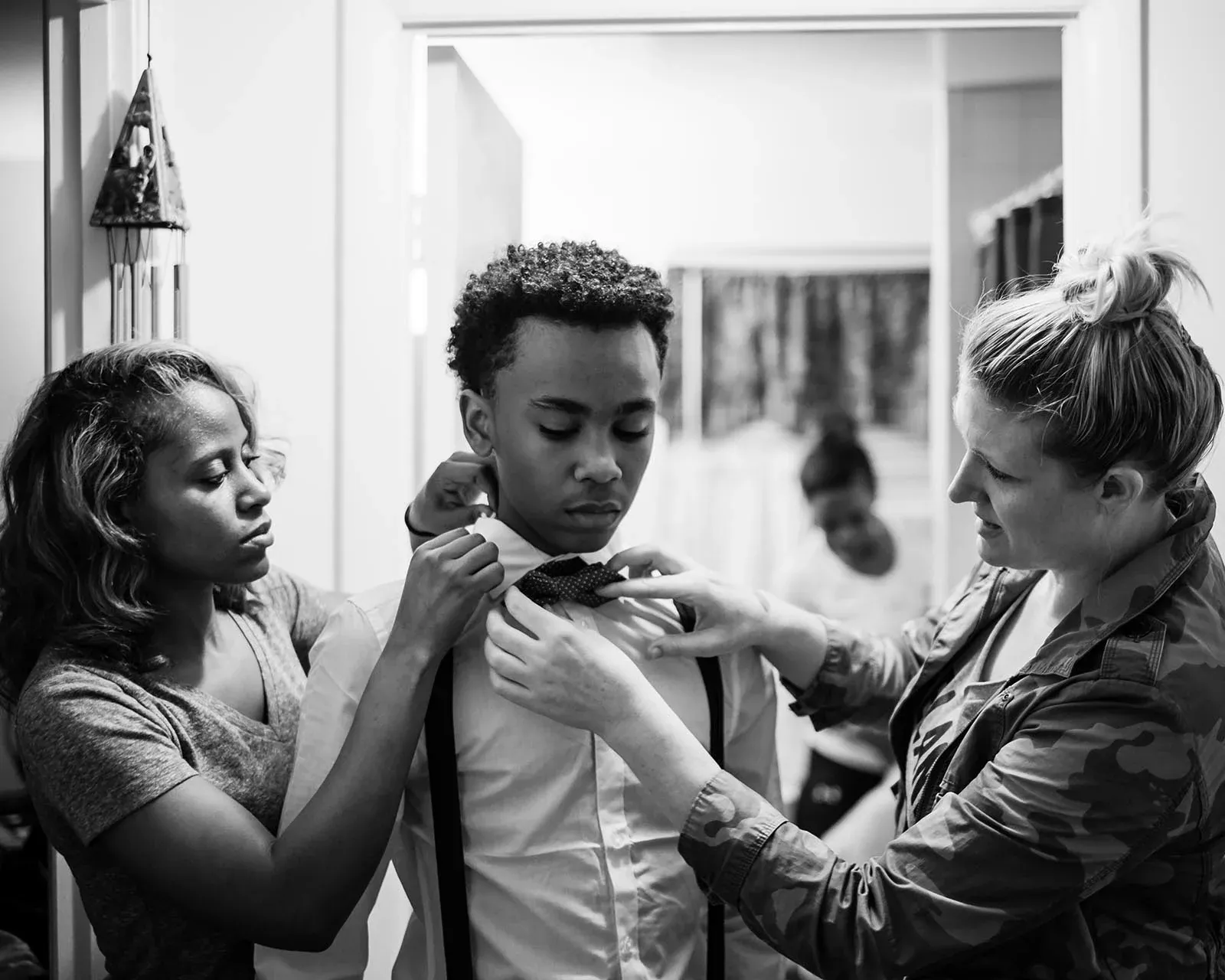
The Black gaze is therefore not adequately understood as an alternative style, aesthetic or politics of representation. It constitutes a theory of photographic recognition. It asks how Black histories, communities, cultural practices and lived experiences produce distinctive conditions under which Black life becomes visible to itself. The resulting photographs are significant not simply because they depict Black subjects, but because they emerge from relationships of knowledge unavailable to photographic traditions organised through distance, extraction or classification.
Such a position does not imply that the Black gaze is singular or uniform. Black life has never produced one aesthetic, one politics or one philosophy of vision. The African diaspora encompasses multiple histories, geographies, languages and visual traditions. The Black gaze should therefore be understood as a family of related epistemological practices rather than a fixed doctrine. What unites these practices is not stylistic consistency but a shared commitment to approaching Black people, culture and life through Black ways of seeing and knowing.
The contribution of the Black gaze to photography lies precisely here. It demonstrates that the medium cannot be adequately theorised through universal claims detached from particular histories of perception. Photography has always consisted of multiple traditions of seeing, each producing different forms of knowledge about the world. The Black gaze renders this plurality unmistakable. Its significance, therefore, is not confined to Black photography. It reveals that photography itself has never possessed a single epistemology.
To recognise the Black gaze is consequently to recognise that the history of photography is not the gradual refinement of one universal visual language. It is the ongoing encounter between multiple ways of knowing the world through images. The future of photographic theory depends not upon identifying the correct gaze, but upon understanding how different traditions of seeing continue to expand what photography is capable of knowing.
What photography would fail to understand about itself
The significance of the Black gaze cannot be measured solely by the photographs it has produced or the communities it has represented. Its deeper importance lies in the challenge it presents to photography's understanding of itself. Every theoretical intervention ultimately reveals the assumptions it renders untenable. The Black gaze is no exception.
For much of its history, photography has organised itself around the aspiration to universality. Differences of culture, geography and history have often been treated as variations within a common visual language rather than as evidence that photography itself may consist of multiple epistemological traditions. Even critical accounts that reject photographic objectivity frequently retain the assumption that the medium possesses a shared conceptual foundation from which alternative practices subsequently diverge.
The Black gaze destabilises that assumption.
It demonstrates that ways of seeing are inseparable from ways of knowing, and that ways of knowing emerge from historically situated forms of life. Photography cannot therefore be reduced to a universally available technology whose meaning remains constant irrespective of cultural experience. It is better understood as a constellation of visual traditions, each producing distinctive relationships between attention, recognition, memory and knowledge.
This has consequences that extend well beyond Black photography. If the Black gaze reveals forms of life, relationship and historical experience that dominant photographic traditions have repeatedly struggled to recognise, then the resulting deficiency belongs not to Black life but to photographic theory. The limitations exposed by the Black gaze are limitations in the conceptual vocabulary through which photography has attempted to understand itself.
The question is consequently no longer whether the Black gaze deserves recognition within the history of photography. That history has already been transformed by generations of Black photographers whose work exceeds the categories through which it has often been interpreted. The more pressing question concerns the future of photographic thought. What conceptual resources will photography require if it is to account adequately for the plurality of ways through which human beings come to know the world visually?
The argument advanced throughout this essay suggests one possible answer.
The Black gaze seeks to reveal the fullness of Black people, culture and life through Black ways of seeing and knowing. This proposition should not be understood as a definition that concludes the conversation. It is offered instead as a theoretical orientation through which photography may begin to reconsider its own foundations. Fullness is not proposed as an aesthetic category but as an epistemological commitment: a refusal to mistake partial knowledge for complete understanding, or dominant histories of seeing for universal ones.
Photography has never possessed a single gaze.
It has always consisted of multiple traditions of recognition, each revealing different worlds while leaving others unseen.
The Black gaze matters because it reminds photography of something it had forgotten about itself: there has never been only one way of seeing.
Key idea
References
Primary texts
These are the works that directly shaped the argument.
- Black Looks: Race and Representation — bell hooks
- Listening to Images — Tina M. Campt
- A Black Gaze — Tina M. Campt
About Foundation Essays
This essay is part of theBLKGZE's Foundation series, which explores the ideas that shape photography, visual culture and the Black gaze.
Supporting scholarship
- Representation: Cultural Representations and Signifying Practices — Stuart Hall
- Photography Against the Grain — Allan Sekula
- The Civil Contract of Photography — Ariella Azoulay
- Selected essays by Kobena Mercer on Black diaspora aesthetics.
- Selected essays by Teju Cole on photography and visual ethics.


