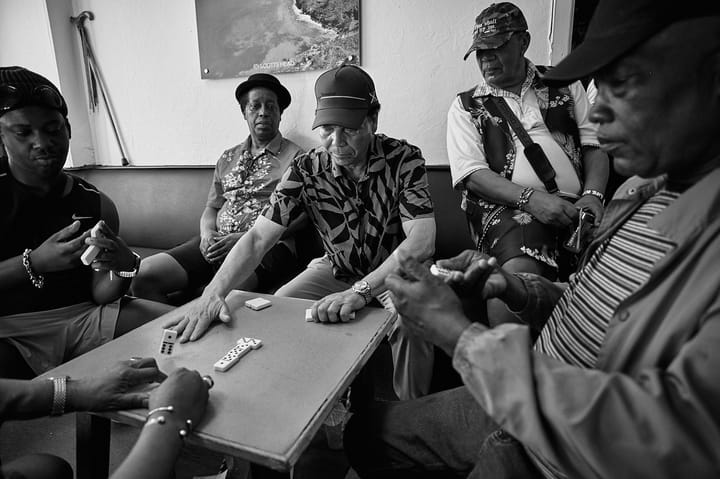
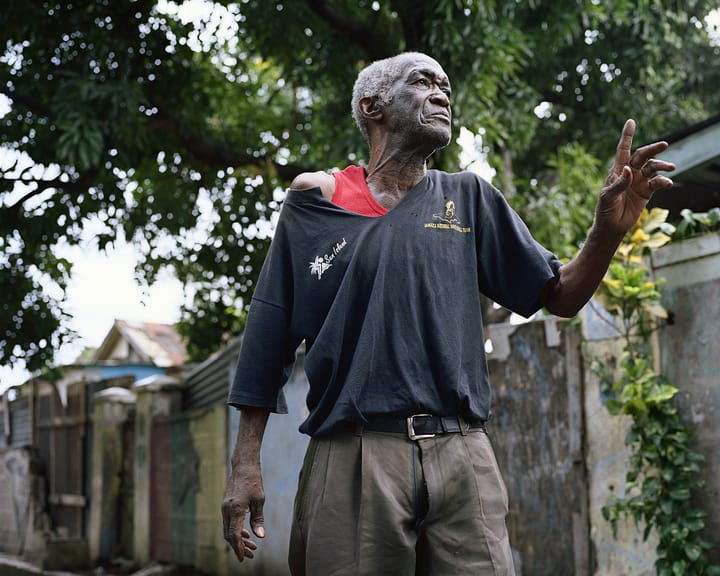
Blackness doesn’t need to be defined by only struggle
What we learn to see
For much of photography's history, Black life has entered the frame through hardship. Cameras arrived at moments of protest, poverty, violence, or resistance. These images mattered. Many still do. They documented realities that demanded attention and challenged injustices that could not be ignored.
The problem arises when struggle becomes the primary way Black life is made visible.
Over time, repetition shapes expectation. Audiences learn to associate Blackness with hardship. Institutions reward images that reinforce familiar narratives. Photographers themselves can begin to feel that pain is the most legitimate route to significance.
The result is not necessarily inaccurate. It is incomplete.
The politics of care
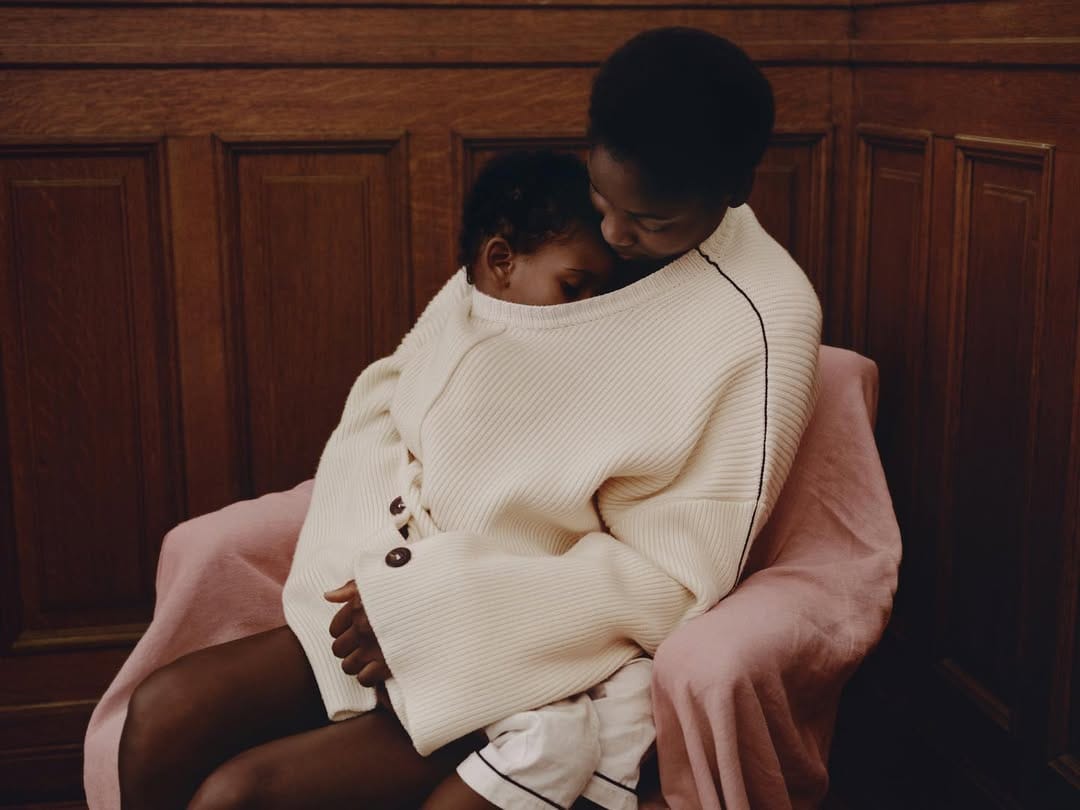
Tyler Mitchell's photograph offers a different way of seeing.
The image is built around care. One figure shelters another. The oversized jumper functions almost like a cocoon, creating a private space within the frame. The relationship between the two subjects becomes more important than any larger narrative the viewer might try to impose upon them.
What makes the photograph powerful is its ordinariness.
Nobody is performing resilience. Nobody is overcoming adversity. The image does not derive its emotional force from suffering. Instead, it finds meaning in closeness itself. The photograph reminds us that care is not separate from Black life. It is part of Black life.
This may seem obvious, but photography has not always treated it as such.
Black subjects have often been photographed through public narratives. They appear as protesters, victims, athletes, activists, or symbols of broader social issues. Mitchell's photograph turns away from those expectations. It directs our attention towards affection, protection, and belonging.
The radicalism lies not in the act itself, but in the fact that photography has so rarely treated such moments as central.
Beyond survival
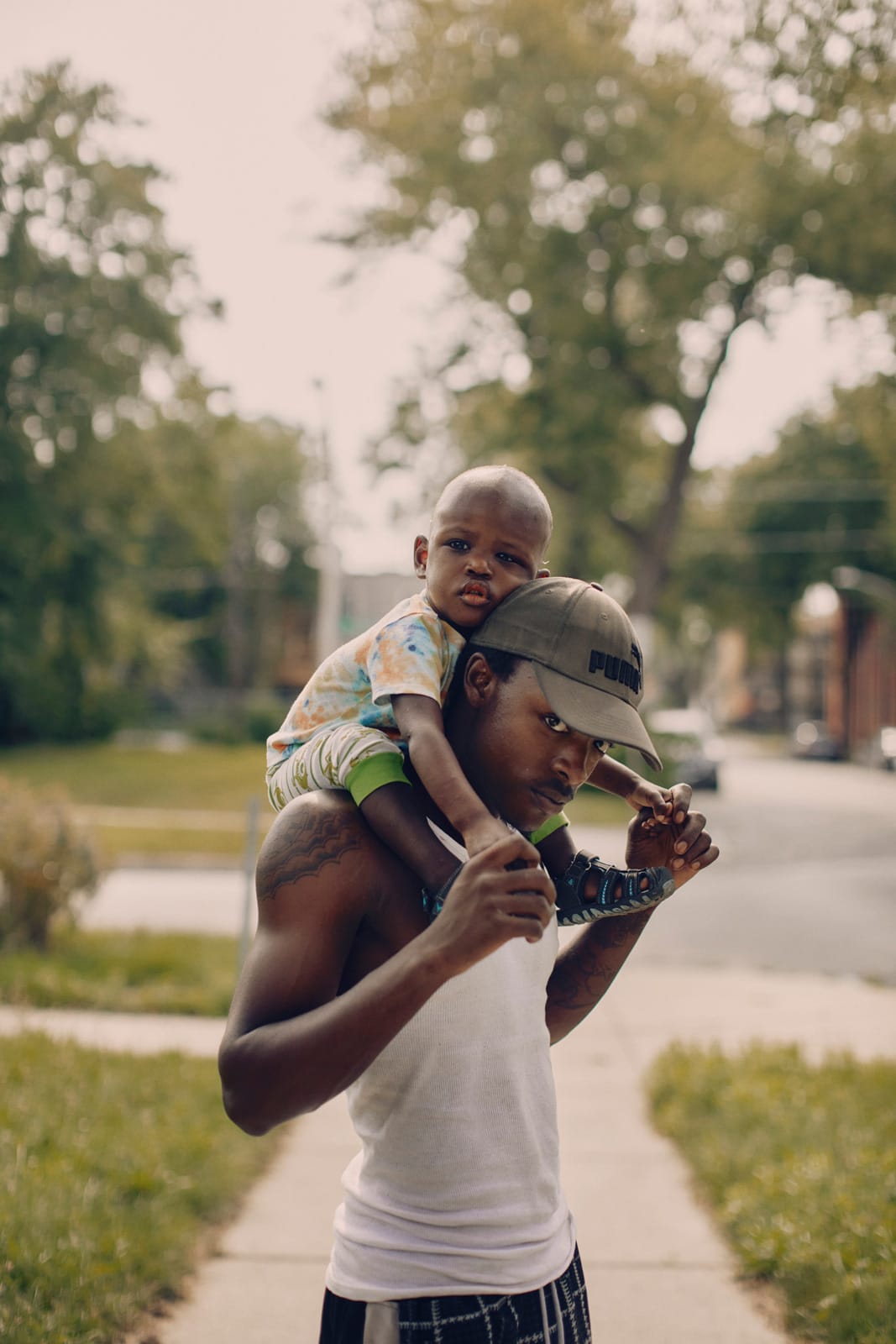
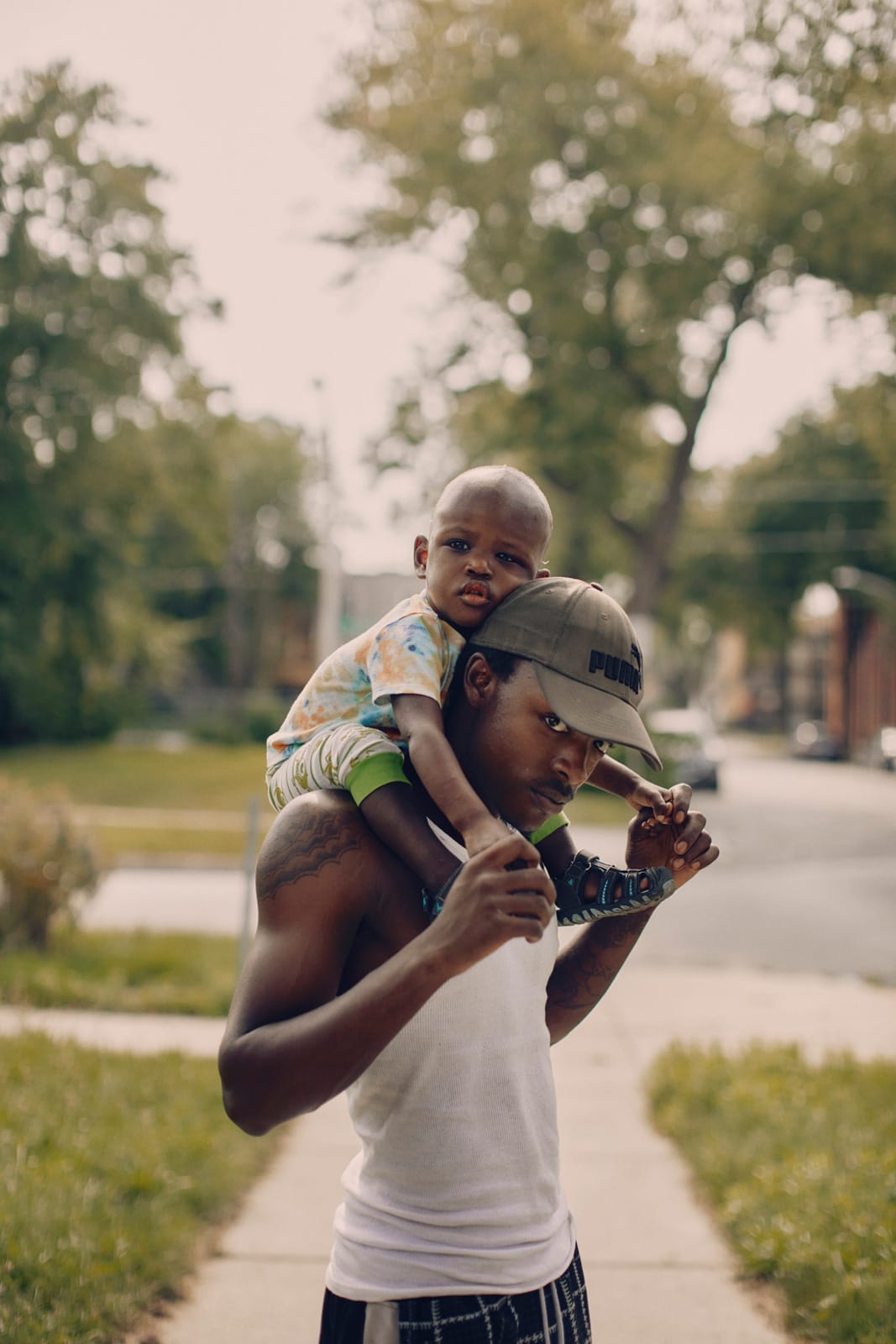
Micaiah Carter's photograph builds upon this idea while moving in a different direction.
A young man stands on a quiet residential street with a small child perched on his shoulders. The child looks directly into the camera, curious and self possessed. The man lowers his gaze, one hand resting gently on the child's foot. It is a carefully composed portrait, yet what lingers is not the pose itself. It is the relationship between the two figures.
The photograph feels familiar because it echoes countless images found in family albums. A child carried home. A relative looking after someone younger. A fleeting moment of care preserved because it mattered to the people living it. These photographs rarely enter museums or newspaper front pages, yet they form an important part of how communities remember themselves.
What makes Carter's image so compelling is its refusal of spectacle. The soft afternoon light, the blurred trees, and the ordinary street behind them create no sense of drama. Nothing has been arranged to feel extraordinary. Instead, the photograph asks us to pay attention to something quieter: the trust that exists between the child and the person carrying them.
This matters because Black masculinity has often been photographed through a narrow set of visual narratives. The camera has frequently looked for danger, achievement, athleticism, celebrity, or resilience. Much less attention has been given to the ordinary responsibilities that shape everyday life. Carter offers a different visual language. Here, masculinity is expressed through care, attentiveness, and presence.
Looking at the photograph, one begins to realise how often significance is confused with spectacle. Visual culture encourages us to search for moments of conflict or crisis because they appear urgent. Carter's portrait reminds us that significance can also be found in the everyday. A child balanced on someone's shoulders. A hand resting lightly on a foot. A gesture of protection so familiar that it can easily pass unnoticed.
The photograph does not ask us to witness struggle. It asks us to recognise a relationship. In doing so, it expands our understanding of what Black life can look like in front of the camera. This is not an attempt to erase hardship from the picture. It is a reminder that hardship has never been the whole picture. Black life has always contained care, responsibility, affection, and trust. Carter's photograph simply asks us to look closely enough to see it.
The inheritance of memory
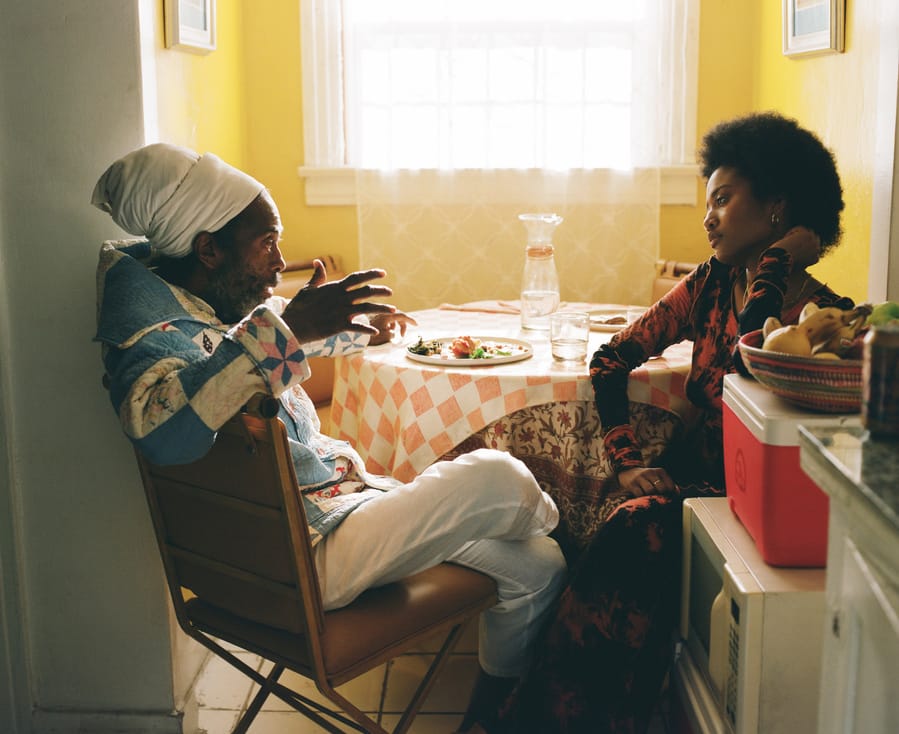
Ronan McKenzie's photograph shifts our attention from care to conversation.
An older man sits at a kitchen table, leaning forward as he speaks. Across from him, a younger woman listens attentively. Between them sits an ordinary meal. Light fills the room. The tablecloth, the glass of water, the bowl of fruit, and the everyday objects scattered throughout the kitchen all contribute to a sense of familiarity.
Again, very little appears to be happening. Yet the photograph carries enormous weight.
The image is built around listening. Knowledge moves between generations. The older man appears to be sharing a story, memory, lesson, or experience. The younger woman receives it. What the photograph captures is not simply two people occupying the same room. It captures a relationship.
The kitchen table has long occupied a significant place within Black visual culture. It is where stories are told, histories are preserved, and identities are shaped. Solomon understands this. Rather than searching for spectacle, he focuses on a moment that might otherwise pass unnoticed. That choice matters.
If Blackness is repeatedly photographed through crisis, then photographs like this can feel surprisingly rare. Yet communities are not sustained by struggle alone. They are sustained through conversation, memory, teaching, and care. The knowledge passed between generations often matters just as much as the battles fought in public.
Solomon's photograph reminds us that Black life is not only lived in the streets. It is also lived around tables, between generations, and within relationships.
Expanding the frame
The goal is not to erase struggle from photography. Doing so would simply create a different distortion.
Struggle remains part of Black history and Black experience. It deserves to be documented. The challenge is ensuring that it does not become the only story photography knows how to tell.
What unites the work of Tyler Mitchell, Micaiah Carter, and Justin Solomon is not that they avoid difficult subjects. It is that they refuse to allow difficulty to become the sole organising principle of Black representation.
Their photographs direct our attention towards care, responsibility, memory, and connection. They remind us that Black life has always contained far more than the visual culture of struggle often allows us to see.
Photography shapes how people understand the world. It teaches viewers what is worthy of attention. For too long, many images of Black life have focused on what Black people endure.
These photographs ask a different question. What happens when we focus on how Black people love, protect, teach, remember, and care for one another? The answer is not a rejection of history. It is a fuller picture of it.
Blackness has never been defined solely by struggle. Photography is only beginning to catch up.