The gaze begins before the photograph
We often think a photographer's gaze begins when the camera is raised. But the most important decisions may already have been made. What if photographic instinct is partly inherited judgement?
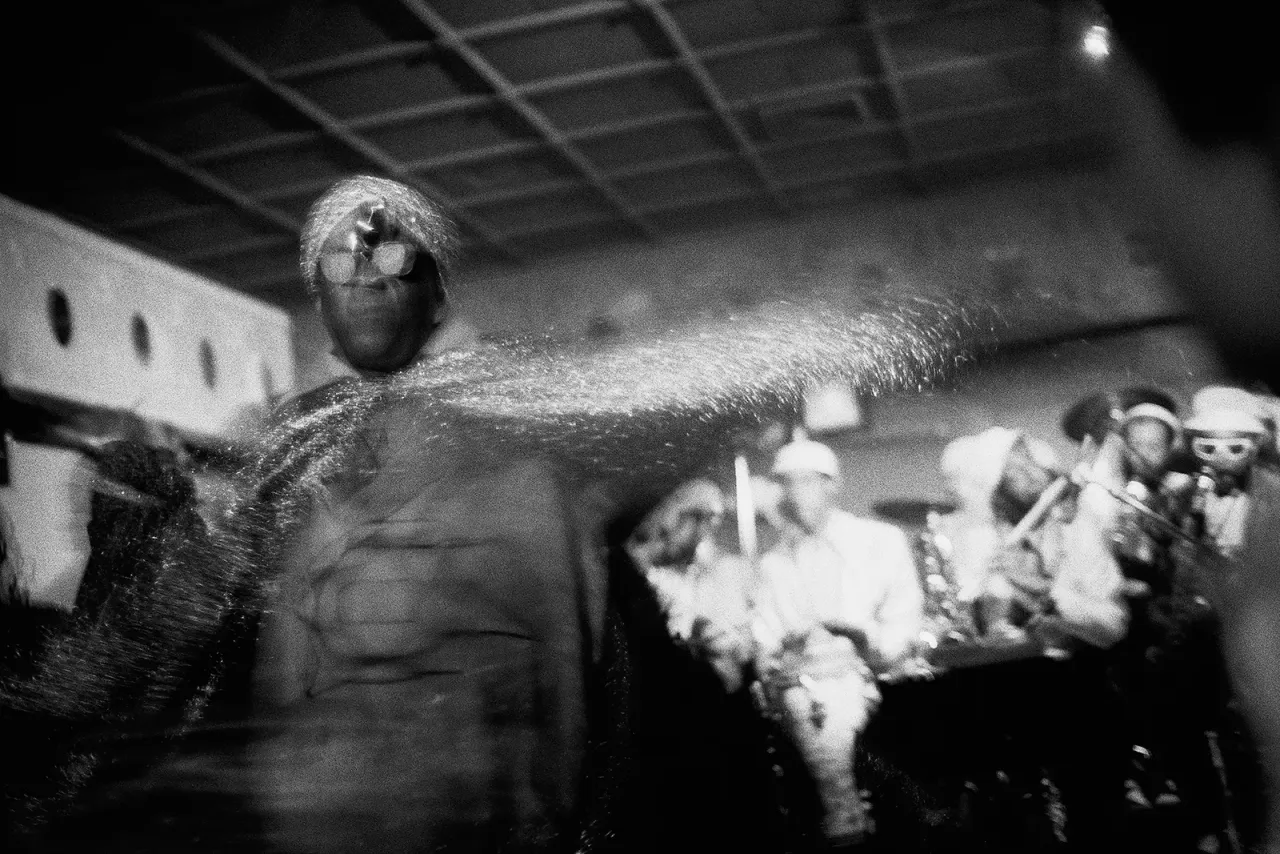
Look at Ming Smith's photographs of Sun Ra and his Arkestra and it is difficult to know exactly where the photograph ends and the performance begins. Figures emerge and disappear. Movement becomes blur. Light seems to arrive from somewhere beyond the frame. The photographs document a musical world without behaving like straightforward records of it.
That difficulty is useful.
We often talk about a photographer's gaze as though it begins when the camera is raised. We see the photograph and then ask what the photographer saw. But by that point, many of the important decisions have already been made. The photographer has decided where to stand, what to wait for, what to ignore, what kind of encounter matters and what might be worth making into a photograph.
The gaze begins before the photograph.
Every photographer learns to see long before they develop a photographic voice. Not only through experience, but through the photographs placed in front of them. Photobooks, museums, magazines, competitions, university courses, workshops and social media all teach photographers what photography is supposed to look like. They teach us what makes an image powerful, what constitutes good composition, which moments matter and which stories appear worthy of attention.
Most of this education is so familiar that we stop recognising it as education.
A photographer learns the decisive moment, the compelling portrait, the dramatic light, the revealing gesture. They learn to recognise certain kinds of visual significance almost instinctively. What feels like personal taste can therefore contain generations of inherited judgement. Before discovering a photographic voice, we often acquire a photographic accent.
This is where the idea of a universal photographic gaze begins to unravel.
Photography's mechanics may be universal. Light behaves according to the same physical principles whether the photographer is working in London, Lagos or New York. But deciding to photograph a particular person, moment or place is not a physical act. It is cultural. It depends upon what the photographer has learned to recognise as meaningful.
The camera does not decide what matters. People do.
Yet photography has often treated the visual conventions produced by particular histories as though they were simply the natural language of the medium. A tradition shaped through European modernity, colonialism and the institutions that developed around photography became so dominant that its preferences could disappear into the category of photographic common sense.
That is the power of a dominant gaze. It does not need to announce itself as a particular way of seeing. It only needs to become familiar enough that alternatives begin to look like departures.
This matters when we think about the Black gaze.
It is tempting to define the Black gaze through authorship: photographs made by Black photographers, or photographs made about Black people. But neither is sufficient. Black photographers can inherit and reproduce the same conventions as anyone else. The more interesting question is not simply who holds the camera, but what has taught the person holding it how to look.
bell hooks' writing on the oppositional gaze is useful because it makes looking historical. Black spectators do not encounter visual culture from a neutral position. They bring histories, experiences and forms of knowledge to what they see. Looking is therefore not just seeing. It is interpretation shaped by where we have come from.
Tina M. Campt takes the question further by asking what photographs might communicate beyond what is immediately visible. Her work encourages a form of attention capable of recognising quiet, ordinary and easily overlooked forms of Black life. The significance is not simply that different things enter the frame. The terms of photographic attention begin to change.
If attention determines what becomes photographically significant, then every photographic tradition also contains its own blind spots. To learn what deserves attention is simultaneously to learn what does not. The history of photography can therefore be read not only through the images it has preserved, but through the lives and experiences it has repeatedly failed to recognise as worthy of sustained attention.
This is why representation alone cannot resolve the problem.
We can put Black people in the frame without changing the gaze that determines how they are seen. We can diversify photographers, subjects and institutions while leaving the underlying assumptions about photographic value intact. The image changes, but the grammar remains.
The Black gaze becomes consequential when it unsettles that grammar.
It does not simply ask photography to produce more positive pictures of Black life, or to replace images of suffering with images of joy. Both can become their own forms of expectation. Black life is not made fuller by swapping one narrow category for another.
It becomes fuller when it is allowed to exceed the categories.
Perhaps this is what makes Smith's photographs worth returning to. They do not seem particularly interested in giving us the kind of photographic certainty we have been trained to value. They ask us to stay with atmosphere, movement, relationship and feeling. They remind us that a photograph does not have to explain everything it encounters in order to know something about it.
The Black gaze is not a style. It is not an aesthetic code. It is not the automatic consequence of a Black photographer holding a camera. It is a challenge to the idea that photography ever had one way of seeing.
Once we understand that the gaze begins before the shutter, the question changes. It is no longer simply, What am I looking at? It becomes: Why have I learned to recognise this as worth looking at?
That question reaches further than the photograph in front of us. It reaches into the images we study, the photographers we celebrate, the competitions we enter and the visual habits we pass on.
Photography may be made with a camera. Seeing is learned long before one is raised.
Foundation
The ideas that shape how theBLKGZE thinks about photography, visual culture and Black ways of seeing.


