Proximity is not knowledge
Being close to a life can change what a photographer sees, but proximity is not the same as knowledge. Even shared identity, culture or intimacy cannot guarantee that another person has been truly seen.
Being close to someone is often treated as a kind of photographic qualification. Live in the neighbourhood, belong to the community, share the culture, know the language, photograph your own family, and the assumption follows that you must understand what you are looking at better than someone who does not.
There is truth in this. Distance can produce a particular kind of blindness. An outsider can arrive with assumptions already attached to the people in front of the camera, mistaking familiarity with a stereotype for knowledge of a life. But another assumption can hide inside the argument for proximity: that being inside a world automatically gives you the right way of seeing it. It does not.
Proximity changes the conditions of looking. It does not remove the responsibility to look.
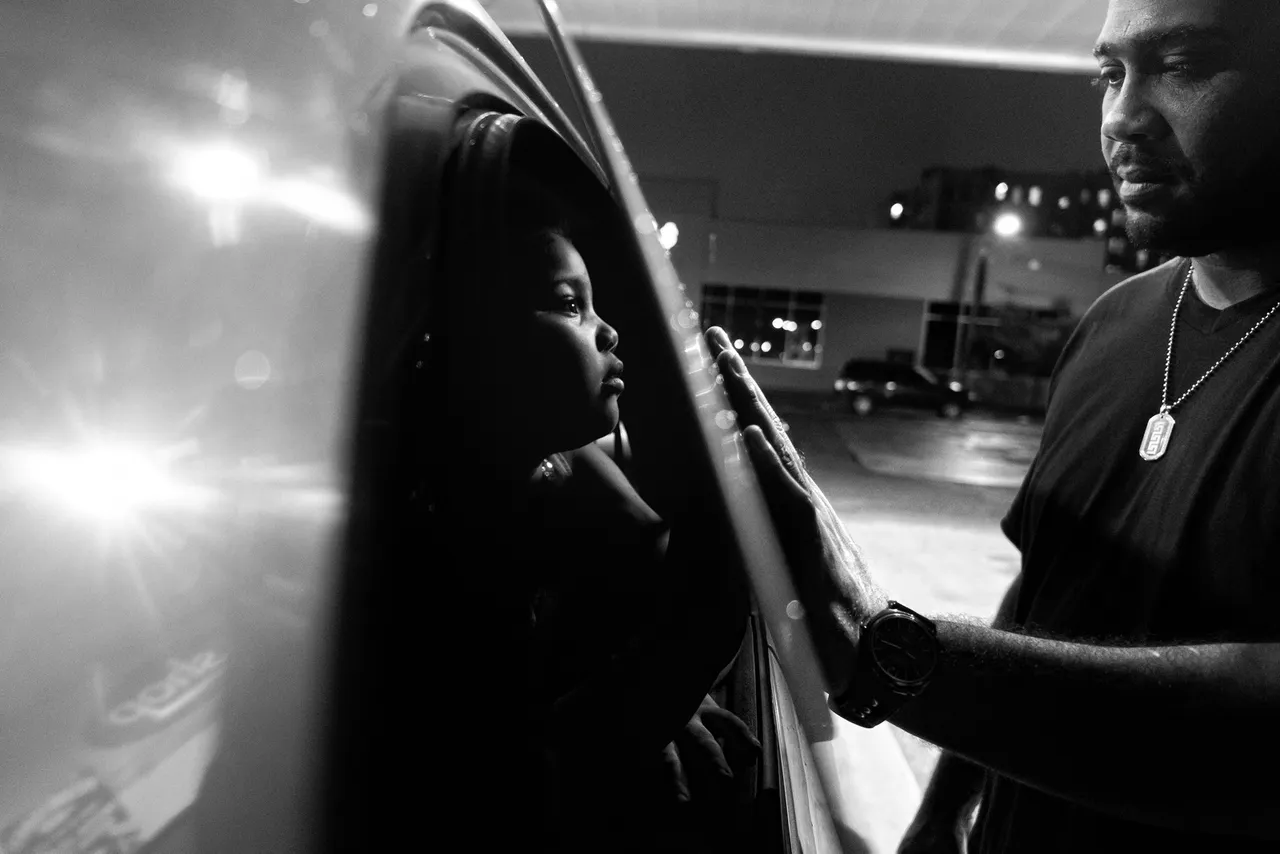
Zun Lee's Father Figure complicates the easy distinction between insider and outsider. Lee is Korean and grew up in Germany, but his relationship to the Black fathers he photographed was deeply personal. He had discovered that his biological father was African American, while his childhood had been shaped by African American military families. He began photographing Black fathers partly in response to the stereotype of Black fatherhood as absent or irresponsible, but also as a way of working through his own history. Over several years, he built relationships with families beyond the act of taking photographs, moving towards a more collaborative relationship between photographer and subject.
What matters is not that Lee was close enough to finally see the truth. It is that the project shows how much work is required before closeness can become photographic knowledge.
There is a difference between being present and paying attention. There is a difference between recognising someone's culture and knowing their particular life. There is a difference between sharing an identity and understanding an individual. Even intimacy has limits. Another person's interior life is not something proximity grants us access to.
Photography becomes interesting here because the camera is so easily mistaken for a device of access. Get close enough and you will see. Spend enough time and you will understand. Photograph someone from within their community and the resulting images will somehow carry an authenticity unavailable to outsiders.
But a photograph does not become truthful simply because the photographer is near.
This matters when we talk about Black photography. The argument for Black photographers photographing Black lives is often made through representation, and rightly so. Who photographs whom can alter what is noticed, what becomes significant and which assumptions enter the frame. Black photographers have often recognised forms of Black life that an inherited photographic culture has overlooked. But if this becomes a simple hierarchy, where insider equals understanding and outsider equals ignorance, we reproduce another version of photography's old mistake: confusing position with knowledge.
A Black photographer can still arrive with assumptions about another Black person. A family member can still misunderstand the person they photograph. A local photographer can still impose a story on a neighbour. Shared language, history or skin colour can change what a photographer recognises, but none guarantees that they will see another person clearly.
None of this weakens the case for situated looking. It makes that case more demanding.
The important question is not simply, "Who are you to photograph this?" It is also, "What has your position allowed you to notice, and what might it prevent you from seeing?" Experience is photographic knowledge, but it is not photographic omniscience. The same history that gives a photographer particular insight can also make certain things feel so familiar that they stop being examined.
This is why relationship matters. Not because relationships guarantee truth, but because they introduce the possibility of being corrected.
Lee's Father Figure makes this visible. His concern with how the fathers and families experienced the photographs points towards something more useful than a claim to authenticity. The photographer does not own the meaning of what is photographed simply because they have access to it. Being trusted with someone's life is not the same as possessing it.
Perhaps this is one of the things photography has been reluctant to admit. Looking is never just a matter of where you stand. It is a relationship between position, experience, expectation, attention and another person's willingness to be seen. The camera records the encounter, but it cannot settle the terms of that encounter for us.
This also changes what we should ask of photographs made by outsiders. The answer is not that outsiders should never photograph Black communities, nor that every photograph made from within a community is inherently more truthful. The more useful question is what kind of looking the photographer has brought with them, what they have learned, what they have assumed, and whether the people being photographed have any meaningful place in that process.
A photograph made by someone who has travelled thousands of miles can misunderstand a life. A photograph made by someone who has lived beside it for decades can do the same. What separates them is not geography alone, but attention, relationship, humility and the willingness to discover that what seemed familiar was never fully known.
Perhaps that is the more difficult promise of a Black gaze. Not that it gives us privileged access to Black life, but that it asks us to take seriously the conditions under which anyone comes to know another person.
Even when we are close, there is still someone else in the frame.
Foundation
This essay is part of theBLKGZE's Foundation series, which explores the ideas that shape photography, visual culture and the Black gaze.


